
 by
Last Updated on November 4, 2026 by Avia
Quick Answer: Cobra symbolism represents protection, personal power, transformation, heightened perception, and decisive action. For me, its deepest lesson is honing: refining our instincts, conserving our resources, and knowing when to act, wait, or withdraw.
Table of Contents
- The Cobra Is More Than Its Venom
- What Does a Cobra Symbolize?
- The Spiritual Meaning of the Cobra: The Art of Honing
- Seven Remarkable Cobra Behaviors and Their Symbolic Lessons
- Classic Cobra Symbolism: Shedding, Venom, and the Senses
- Cobra Symbolism in Ancient Cultures and Mythology
- Cobra Spirit Animal and Totem Meaning
- White Cobra Symbolism: Intuition, Mystery, and Spiritual Insight
- What Does It Mean to Dream About a Cobra?
- Final Thoughts: The Cobra’s Lesson in Precision
- Frequently Asked Questions About Cobra Symbolism
- Other Symbolic Snake Articles on Whats-Your-Sign
The Cobra Is More Than Its Venom
There’s something downright mesmerizing about a cobra. The sleek, streamlined body. The regal way it rises from the earth. That unmistakable hood, unfurled like a declaration: I see you. Now, what are we going to do about it?
Danger and venom tend to dominate the conversation, but I’m more interested in the details people overlook. Here is a creature whose body seems made for action, yet whose most remarkable choices aren’t always about doing something. A cobra may move, stand its ground, warn an intruder, or remain perfectly still. None of those responses is interchangeable.
I’ve spent years exploring what animals can teach us through their behavior, and the cobra has become a particularly provocative subject. What catches my attention isn’t simply its capacity for defense. It’s the extraordinary range of responses available to an animal we so often reduce to a single, fearsome image.
What Does a Cobra Symbolize?
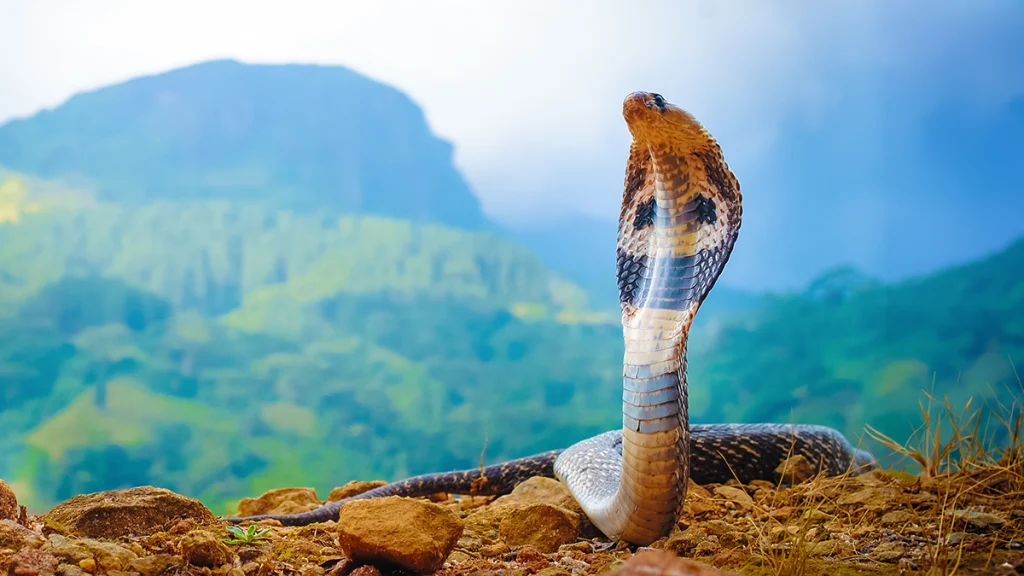
The principal associations of cobra meaning include protection, authority, transformation, alertness, and the consequences of power. Its expanded hood can signal a visible warning; shedding suggests renewal; and its presence in Egyptian and Asian traditions lends it sacred and royal significance.
I add one interpretation of my own: Cobra = honing. The cobra asks us to examine what we’re carrying, what we’re overlooking, and what deserves our best attention. That’s the thread I’ll follow here, rather than assigning a supernatural meaning to every movement of a snake.
For another angle on how symbolism informs decisions, see my exploration of the symbolic meaning of choice.
The Spiritual Meaning of the Cobra: The Art of Honing
I’ve come to think of the cobra as something of a spiritual minimalist. Strip away the excess, dispense with the distractions, and get down to the business of being exquisitely effective. There’s an almost Vulcan logic to its energy.
It is this. It is that. We do. Or we do not.
But I find the in-between spaces of action or non-action just as fascinating. What happens when neither option is clear? Perhaps we observe. Perhaps we gather more information. Perhaps we acknowledge that uncertainty is part of the picture instead of pretending we already have the answer.
I don’t mean perpetual fence-sitting. Quite the opposite. The cobra spiritual meaning, as I understand it, is about preparing so well that a choice eventually becomes unmistakable. We’re not obliged to answer every provocation or take up every invitation merely because it arrived on our doorstep.
And then there’s my favorite serpentine pun: scaling down. Losing the unnecessary weight, not body weight, mind you, but the stale commitments, borrowed opinions, and accumulated mental clutter that interfere with our better judgment. We become a slimmer, keener version of ourselves.
There’s a shrewdness to this practice. We learn to distinguish intuition from fear masquerading as certainty, or pride trying to pass itself off as principle. When action finally becomes appropriate, we can follow through without all the extra theatrics. As I wrote in my notes about cobra energy: “Best make it the best strike you can muster.” Metaphorically speaking, of course.
Seven Remarkable Cobra Behaviors and Their Symbolic Lessons
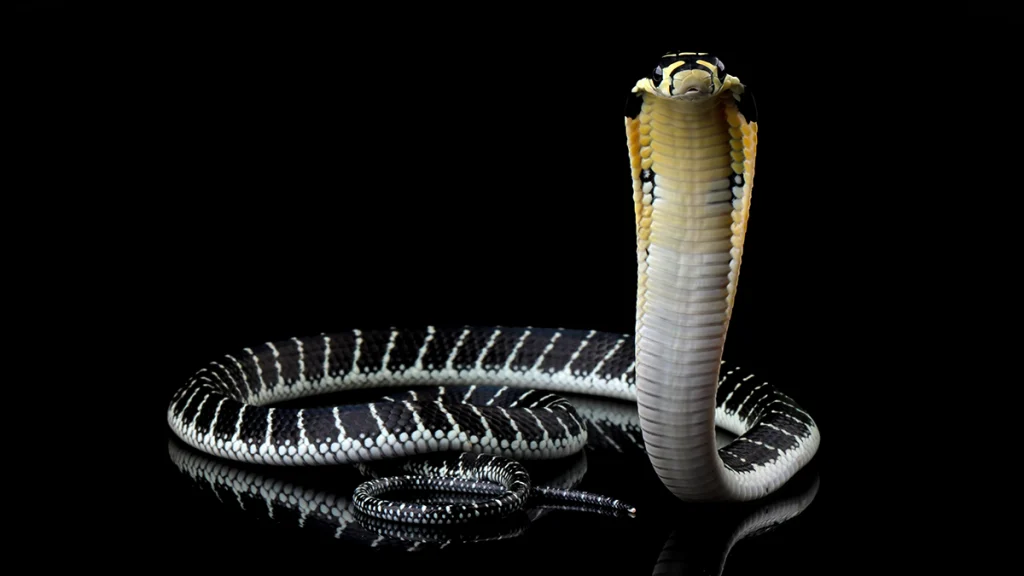
The familiar features (hood, fangs, and shedding skin) are only half the story. Some of the cobra’s lesser-known habits offer even stranger, richer material for reflection. One important distinction: not every behavior below belongs to every cobra species. King cobras belong to the genus Ophiophagus, whereas the so-called true cobras generally belong to Naja. Research published in 2024 also distinguished four species within the king cobra group. See Nature India on the revised classification.
1. The Cobra’s Growl: Finding Your Voice
Did you know a king cobra can growl? Not with mammalian vocal cords, but through its respiratory system. A 1991 acoustic study found a low-frequency defensive sound, with a dominant frequency near 600 hertz, apparently shaped by resonating structures in the trachea.
I love that this animal communicates without sounding like anything we expect a snake to sound like. Symbolically, it asks whether we’re using our own voice. A boundary can be conveyed through a few well-chosen words, a change of tone, or a simple refusal. We don’t have to borrow someone else’s style to make ourselves understood.
2. Nesting: Protecting What Matters
Most snakes don’t construct nests, but female king cobras gather leaves and branches into mounds for their eggs and may guard those nests. The Smithsonian’s National Zoo documents this remarkable reproductive behavior.
To me, a nest means headquarters: a place to call home and protect. That may be an actual dwelling, a treasured relationship, or the private space in which a creative idea can develop before the world gets its hands on it.
But I also wonder: What are we defending so fiercely that we’ve forgotten to enjoy it? A sanctuary should nurture what lives within it, not become a fortress built entirely out of apprehension.
3. The Cobra’s Aim: Meeting a Problem Head-On
Certain spitting cobras can respond to moving faces and direct venom toward the eyes. In experiments with two Naja species, researchers found that moving faces—not hands or stationary faces—triggered spitting, and the snakes aimed at the eye region. That’s specific, and rather unnerving. Read the published research.
My symbolic takeaway isn’t to become confrontational. It’s to stop mistaking the symptoms of a difficulty for its actual source. Are we arguing over a small detail because addressing the real issue would require an uncomfortable conversation? Head-on doesn’t have to mean hostile. Sometimes it simply means accurate.
4. Playing Dead: When Disengagement Is a Strategy
Thanatosis, or death-feigning, has been documented in a spectacled cobra, though it should not be described as routine cobra behavior. In a reported encounter, the animal rolled over and became motionless.
Now that’s an unlikely move for a creature with such a fearsome reputation. Its symbolism suggests that exiting an unproductive encounter can be more useful than fighting to have the final word. There’s a difference between being defeated and declining to participate.
5. Eating Other Snakes: Knowing What You Take In
I once jokingly called this serpentacide, which is decidedly not a scientific term. The name Ophiophagus actually means “snake-eater,” and king cobras feed primarily on other snakes. Their prey can include sizable snakes and other venomous species; the Smithsonian king cobra profile describes their specialized diet.
Here’s where my mind wanders toward the psychological shadow: the qualities we recognize in others but prefer not to acknowledge in ourselves. Another person’s assertiveness may irritate us because we’ve neglected our own. Their independence may unsettle us because we haven’t claimed ours.
There’s an additional question worth asking: What do we habitually absorb? News, opinions, gossip, expectations, even other people’s emotional states can all become part of our internal diet. The snake-eater inspires me to examine what I allow into my mental landscape. That’s not to say I’m condemning everything unfamiliar, but to become a more conscious consumer of it.
6. Rising Up: Taking Up Space
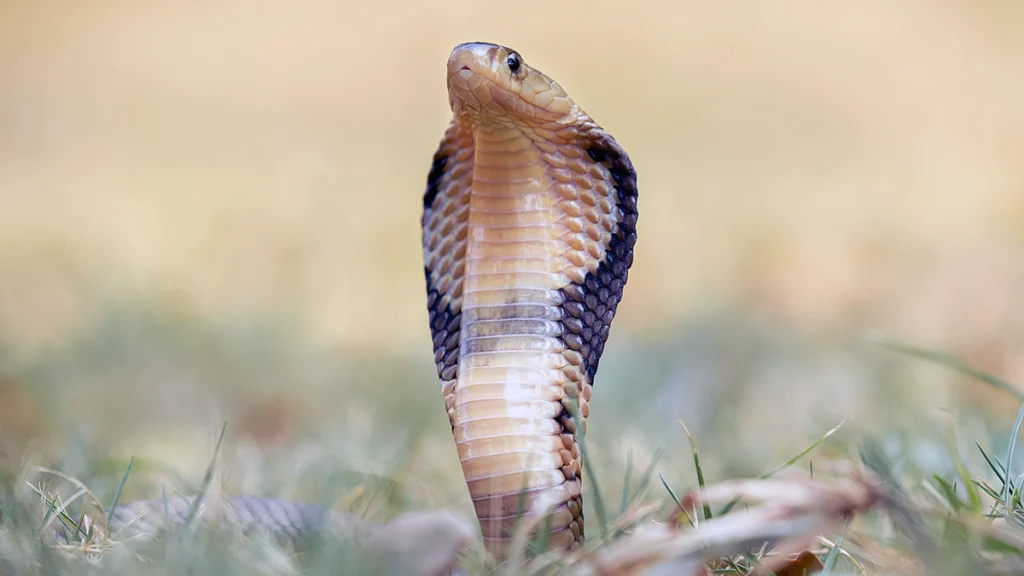
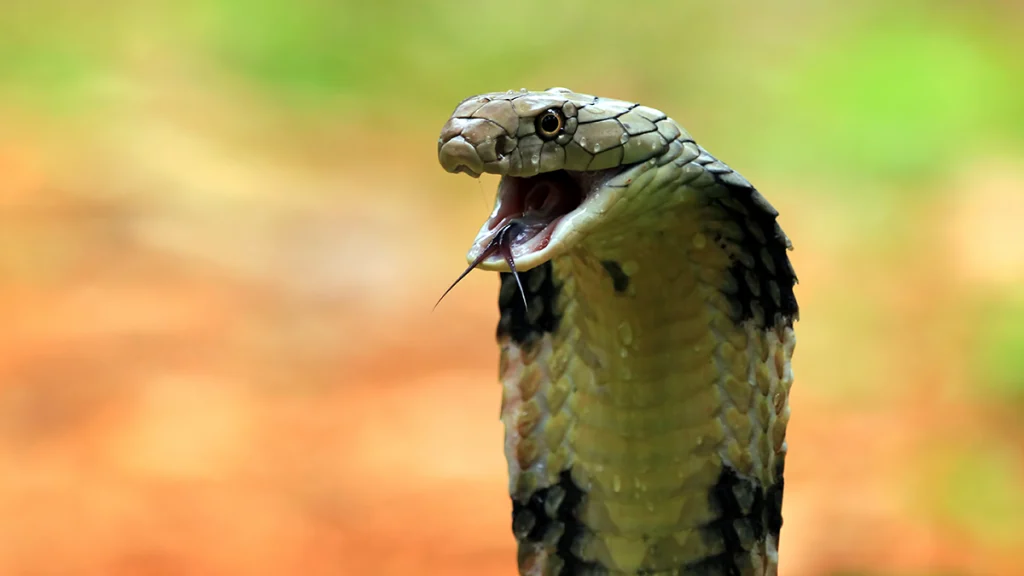
When a cobra elevates the front of its body and spreads its hood, specialized neck ribs help create that dramatic silhouette. The posture generally functions as a defensive display, making the animal appear more imposing; it doesn’t mean an attack is inevitable.
I adore the sheer audacity of this stance. No arms to wave, no feathers to fluff, no booming roar. Yet the message is unmistakable. For me, it’s a reminder that we’re allowed to occupy our rightful space. Not to dominate the room or seek applause, just to stop making ourselves smaller to accommodate somebody else’s discomfort.
7. Cold-Blooded Intelligence: Read the Conditions
Cobras are ectothermic: their body temperature is strongly influenced by their surroundings, so they use behavior and available habitats to help regulate it. “Cold-blooded” is an unfortunate human insult to attach to such a sophisticated biological arrangement.
Symbolically, this is about acknowledging that environment matters. Certain rooms sharpen our thinking; others leave us exhausted. Some relationships help us blossom, while others keep us perpetually braced. The sensible question isn’t whether we can tolerate an unsuitable setting indefinitely, but whether we can alter the conditions, or choose a better place to flourish.
Classic Cobra Symbolism: Shedding, Venom, and the Senses
Shedding Skin: Outgrowing an Old Identity
Snakes shed their outer skin through a process called ecdysis. It permits growth and renews the outer covering. Before shedding, their eyes may look cloudy because a fluid layer develops beneath the old transparent eye covering.
I find that fleeting cloudiness especially evocative. A change of identity isn’t always immediately illuminating. We can know the old role no longer fits without being able to describe the new one just yet. What once protected you may eventually become something you’ve outgrown.
If the symbolism of serpentine cycles intrigues you, I’ve also explored the meaning of the Uroboros, the serpent swallowing its own tail.
Venom: Potency and Consequences
Cobra venom is medically dangerous; depending on the species, it can disrupt nerve signaling and cause potentially fatal paralysis. Separately, researchers study compounds from many snake venoms for possible medical applications. This is not a claim that cobra venom itself is a healing treatment.
I think of venom as an image of potency with consequences. A truthful remark can illuminate or wound, depending on why and how we deliver it. Anger may alert us to an injustice but can also damage something we value. The symbolic question isn’t whether we possess force. It’s what happens when we release it.
For the scientific distinction between toxins and therapeutics, see this review of snake-venom research in Nature Reviews Chemistry.
Sensory Awareness: The World Beyond the Obvious
A cobra’s forked tongue collects chemical cues that are analyzed by its vomeronasal (Jacobson’s) organ. Snakes also detect vibrations, and cobras have functional vision; they are not the nearly blind creatures popular myth sometimes imagines.
These abilities make me consider the signals we miss when we rely entirely on the obvious. Maybe you’ve entered a room and sensed tension before anyone said a word. That doesn’t automatically make the perception supernatural. Our brains notice tone, posture, timing, and patterns long before we can always explain them.
The lesson I take is curiosity: notice the impression, then investigate it. Instinct is valuable, but it benefits from scrutiny.
Coiling and Movement: The Sensual Art of Form
There’s something undeniably sensual about a cobra’s movement, not necessarily romantic, but exquisitely physical. Its body follows the contours of the ground through coordinated muscular contractions; it curves, curls, and redirects itself with scarcely a wasted flourish.
I associate the coil with containment and the winding path with continuity. Neither is a promise that life will move in tidy straight lines. In fact, the body itself becomes part of the interpretation: sensation, physical experience, and the way we inhabit the world are every bit as meaningful as what goes on inside our heads.
Cobra Symbolism in Ancient Cultures and Mythology
Cobras have held sacred significance for centuries, but their meanings are not interchangeable across cultures. Egyptian royalty, Hindu deity imagery, yogic teaching, and Buddhist narrative each have their own traditions.
Ancient Egypt: Wadjet and the Uraeus
If you wanted to make an impression in ancient Egypt, wearing a cobra on your forehead was certainly one way to do it.
The rearing cobra, or uraeus, adorned royal headgear and represented divine authority. It was closely associated with Wadjet, the protective goddess of Lower Egypt. The Metropolitan Museum of Art identifies the uraeus as an emblem of royalty, while another Met museum object explains how cobra imagery guarded sacred spaces and was imagined confronting royal enemies with fire and venom.
The placement fascinates me: a warning and a blessing positioned directly above the brow. It announced not only rank but the supernatural protection understood to accompany kingship.
Hinduism: Shiva, Nagas, and Garuda
Shiva is often depicted with a serpent around his neck, sometimes identified as Vasuki. The image participates in a much larger religious symbolism involving divine power, mortality, and the forces of existence.
Nagas are serpent beings whose roles vary among Hindu, Buddhist, and Jain traditions; they may serve as guardians and are often associated with water and subterranean realms. I’ve written more about these complex beings in the secret life of Nagas.
Another fascinating figure is Garuda, Vishnu’s great bird mount and a traditional adversary of Nagas. I love how mythology resists simple categories: a serpent can be sacred in one setting and the formidable opponent of another sacred creature elsewhere.
Kundalini: The Coiled Serpent
In certain Hindu yogic and Tantric traditions, kundalini is conceived as spiritual energy represented by a serpent coiled at the base of the spine. Teachings describe its awakening and ascent through subtle channels and energy centers. This is a specific religious and spiritual framework, not a generic explanation for every snake dream or vision.
My article on kundalini awakening explores the tradition in more detail; my guide to chakra symbols provides related background. What intrigues me here is the image of spiritual possibility residing within the body itself.
Buddhism: Mucalinda’s Shelter
In the Udāna (2.1), the Naga king Mucalinda shelters the newly awakened Buddha during seven days of stormy weather, wrapping his coils around him and spreading his hood overhead. When the skies clear, Mucalinda assumes human form and pays his respects. You can read an English translation of this early Buddhist account.
What moves me is the image of formidable strength offered in service of someone else’s peace. Mucalinda doesn’t insist on becoming the center of the story. His great hood becomes a canopy, and the Buddha’s contemplation continues undisturbed.
Cobra Spirit Animal and Totem Meaning
Some people identify with a cobra spirit animal because they recognize qualities such as self-possession, independence, strategic thinking, and intense sensitivity to their surroundings. These are interpretive associations, not a fixed personality diagnosis. My discussion of knowing your totem animal offers a broader framework for working with animal symbolism.
If a cobra totem animal resonates with you, notice which traits feel natural, and which might be exaggerated. Are you astute, or habitually suspicious? Self-reliant, or reluctant to accept help? Dedicated to the people you love, or trying to control every outcome on their behalf?
The shadow side of this animal guide interests me as much as its strengths. A cobra power animal can become a useful mirror for examining the difference between sound protective instincts and an urge to manufacture conflict. There’s a world of difference between being formidable and becoming someone everybody feels compelled to tiptoe around.
Try this question: What do I genuinely need to defend, and what could I simply allow to be different from me? You may be surprised by the answer.
White Cobra Symbolism: Intuition, Mystery, and Spiritual Insight
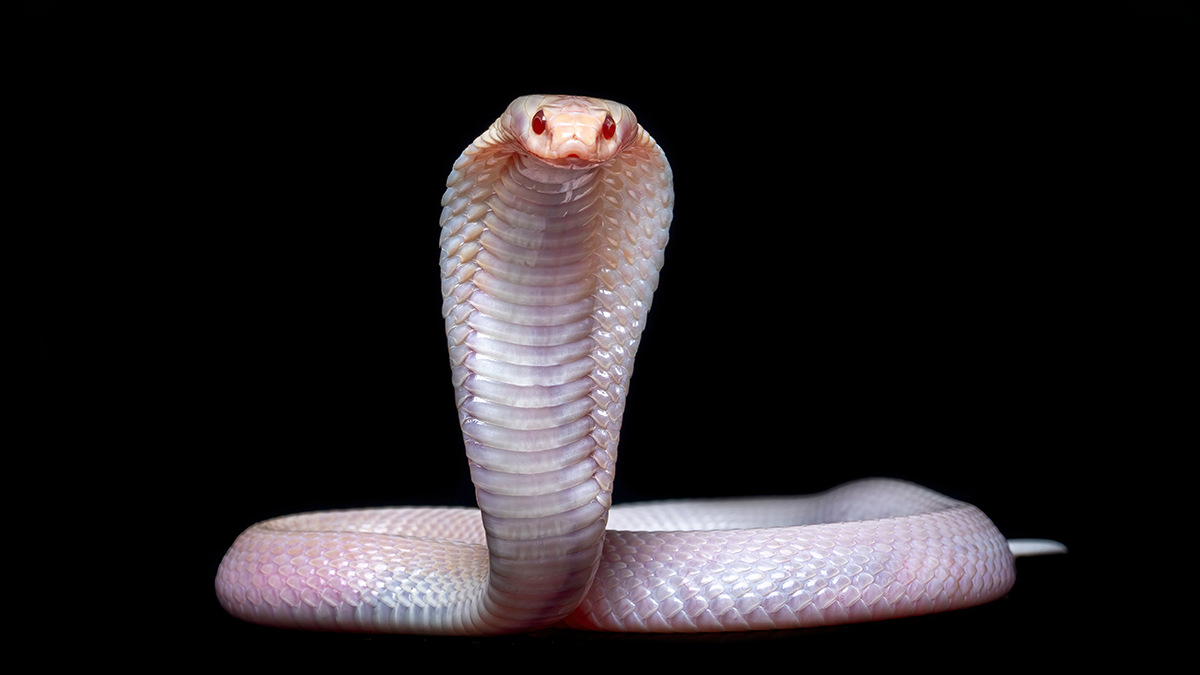
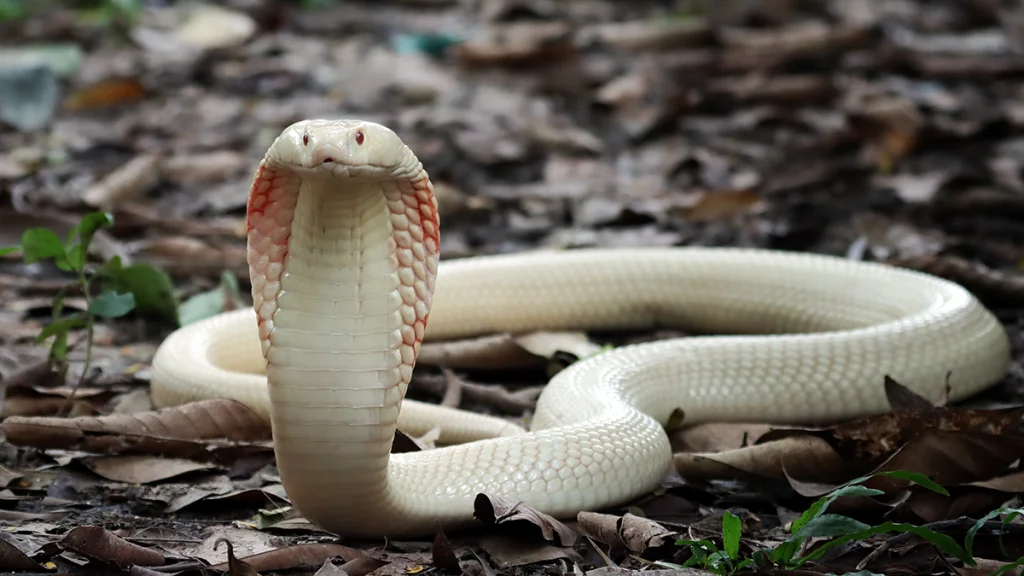
White cobra symbolism invites associations with clarity, purification, revelation, and the unknown. In various spiritual interpretations, white animals can seem startlingly otherworldly precisely because they depart from the appearance we expect.
Biologically, a pale cobra could result from pigmentation differences such as albinism or leucism. Spiritually, though, the significance of an image in a vision depends on the person experiencing it; there isn’t a universal white-cobra codebook.
The white cobra spiritual meaning I find most persuasive in my own experience concerns the mystery of the unanswered encounter. I couldn’t summon the original vision on demand. Yet I came away with a set of observations about this creature that I might never have considered otherwise. Maybe that’s enough. I don’t need to claim that the cobra deliberately withheld a message to appreciate what reflecting on it brought to light.
What Does It Mean to Dream About a Cobra?
A cobra dream meaning depends on what happened in the dream, how you felt, and what in your waking life might connect to the image. I prefer that approach to a fixed dream dictionary. My guide to interpreting dreams explains why personal context matters.
Common Cobra Dream Scenarios
- A cobra rising: Did its elevated posture feel magnificent, intimidating, or both? Consider whether the dream relates to recognition, authority, or an encounter with a strong personality.
- A motionless cobra: Stillness may reflect suspense or an unresolved question. Your comfort (or discomfort) with the scene is the more revealing clue.
- A cobra approaching: Ask what seems to be drawing nearer in your life: an obligation, a conversation, an opportunity, or an emotion you haven’t fully acknowledged.
- A cobra striking or biting: A startling encounter may reflect fear of consequences, conflict, or a sudden realization. My article on dreaming about a snake bite explores that imagery further.
- A calm cobra: An animal that shares your dream space without aggression may invite reflection on something that once frightened you but now feels familiar.
If you’re dreaming of a cobra, jot down the setting, behavior, colors, and emotions as soon as you wake. The spiritual meaning of seeing a cobra in a dream isn’t established by the species alone. It’s shaped by your associations and the circumstances of the experience. An alarming dream doesn’t automatically predict trouble. You might also like my friend Arslan’s article about dreaming of snakes.
Final Thoughts: The Cobra’s Lesson in Precision
If I were to distill everything I’ve learned from contemplating the cobra into a single thought, it would be this: Cobra = honing.
Not becoming louder or more impressive. Becoming more exact: about what we believe, what we welcome, and what we are willing to change. The cobra doesn’t hand us a ready-made answer to every dilemma. It gives us a remarkable creature to contemplate while we work out our own.
Refine your understanding. Trust what you’ve learned, while remaining willing to learn more. And when the moment is right, make your move count.
As always, thanks for reading, and may all your symbolic encounters be illuminating. And if you liked this, check out my other articles about snakes
Mighty brightly,
© Copyrighted. All Rights Reserved.
Frequently Asked Questions About Cobra Symbolism
Neither interpretation is automatic. A real sighting has practical wildlife-safety implications; a symbolic encounter takes its meaning from cultural beliefs and personal context. I wouldn’t treat either as a guaranteed omen.
Yes, most explicitly in ancient Egyptian royal imagery, where the cobra goddess Wadjet served as a guardian. Modern personal interpretations can draw on that association, though they shouldn’t be confused with the original religious meaning.
I associate the king cobra with sovereignty, resourcefulness, and serious self-command. Those are contemporary interpretive meanings, not a single ancient doctrine shared by all cultures.
In nature, the raised hood is generally a defensive warning. In symbolism, it may suggest asserting a presence or making a boundary visible. It shouldn’t be read as proof that an attack is coming.
The spiritual meaning of seeing a cobra depends upon whether the encounter occurs in nature, a dream, meditation, or a vision. Consider your immediate emotional response and the circumstances surrounding the experience. A cobra that inspires fascination may hold very different personal associations from one that provokes fear. And naturally, if you encounter a living cobra, admire it from a safe distance!
Beyond its traditional associations with transformation and protection, a cobra can symbolize discernment, personal responsibility, and the cultivation of inner authority. My favorite interpretation is the art of honing: becoming more intentional about our thoughts, choices, and responses rather than allowing habit or outside pressures to dictate our behavior.
In Hinduism, cobra and serpent imagery appears in associations with Shiva, the Nagas, and sacred cosmic forces. Interpretations vary by tradition, but recurring themes include divine power, spiritual potency, guardianship, and the relationship between life and death. Serpents also appear in certain yogic teachings concerning kundalini, although these beliefs shouldn’t be treated as interchangeable.
Across different mythological traditions, cobras and sacred serpents may embody royal authority, supernatural protection, fertility, spiritual power, or guardianship. Their significance depends upon the culture and story. Egyptian depictions of Wadjet, for instance, differ considerably from Buddhist accounts of the Naga king Mucalinda. These distinctions are part of what makes serpent mythology so fascinating.
People who identify with the cobra as an animal guide may recognize qualities such as self-reliance, sensitivity to their surroundings, perceptiveness, and strong personal convictions. However, animal symbolism isn’t a fixed personality classification. I prefer using these associations as invitations to examine our strengths, habits, and the qualities we’d like to cultivate.
Other Symbolic Snake Articles on Whats-Your-Sign