 by
by Last Updated on May 22, 2025 by Avia
Celtic Symbol for Purity in the Ogham
A new mother asked me if there was an ancient Celtic symbol for purity. She wanted to make a decorative mobile above her baby’s crib that was both powerful, effective and symbolic of the concept of pure-ness.
Specifically, she wanted a symbol for purity with which she could make the mobile…sort of like a blessing and offering gesture. Symbols for purity started flooding my mind when responding to her. But she wanted a physical symbol. So, my go-to reference for an actual graphic symbol is the age-old, time-honored Celtic Ogham. Read on while I elaborate about the Celtic symbol for purity.
The Celtic culture and their application of symbolism tends to not be so specific as to define only one concept. Rather, they had a more broad, or conceptual approach to symbols…one symbol embrace a whole myriad of meanings.
Furthermore, later evolution of the Celtic language of symbolism indicates their meanings were derived primarily from elements of nature (much like the Native North Americans).
For example, the circle is a Celtic insignia that indicates the wholeness of spirit – a soul that is intact, and therefore it is a symbol of pureness in integrity. This would be a primitive Celtic motif for purity.
A more evolved Celtic symbol for purity can be found in the Ogham – which is an ancient Celtic form of communication.
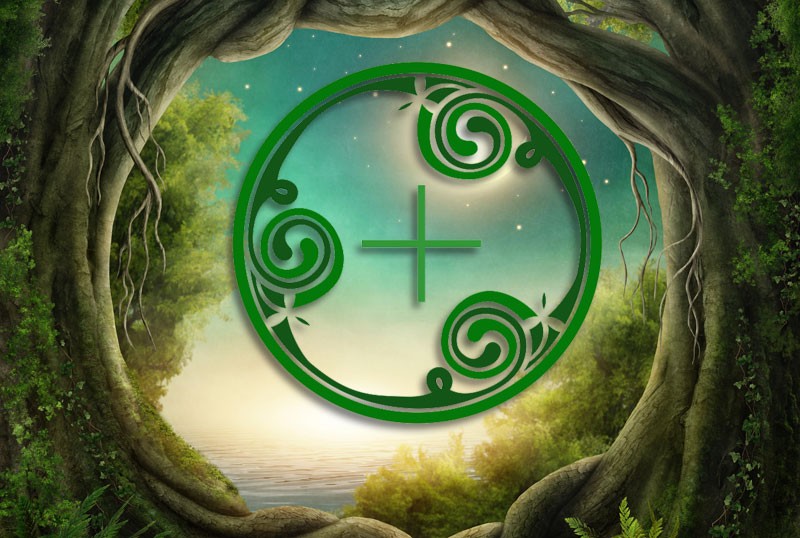
The Ogham, or realm of trees, was consulted for wisdom – each tree holds certain personalities that lend knowledge to the seeker. That said, the Ogham symbol for purity is the “Ailm” or fir (symbol shown here).
The Ailm from the Ogham as a Celtic Symbol of Purity
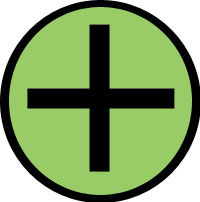
The Ailm symbol is a representation of
- pure energy
- objectivity
- good health
- strength
- clarity
- integrity
This is largely due to the fact that the fir stays green all year round.
Traditionally, (and most specifically in your case) branches of the fir (represented by the Ogham Ailm symbol) were placed beneath the bed of newborn babies in order to assure his/her purity of spirit throughout his/her life.
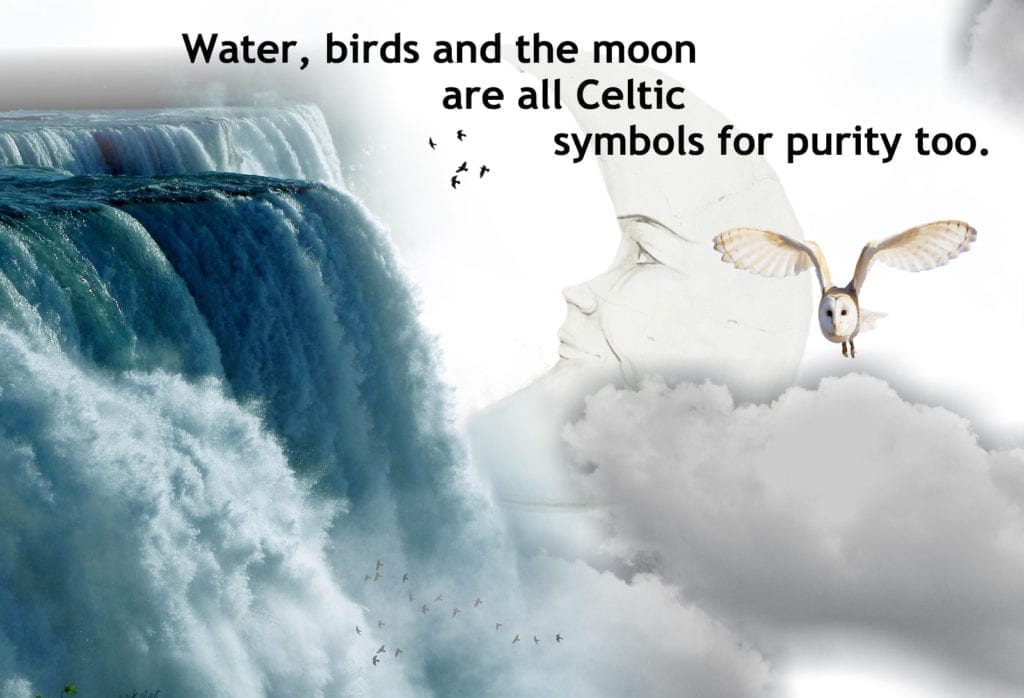
There are more diverse symbolic concepts that the ancient Celts embody in their daily life to convey “purity.”
- The sky that abounds is a blanket of purity
- Water with its clarifying and cleansing properties resonates purity
- Birds were often symbolic vessels of purity as they exist at a higher vibration to live in the endless skies
These are just a few ideas. I would encourage you to take the time to meditate, research, contemplate, and tap into the energies of our Celtic forebears for your own personal Celtic symbols of purity.
More About the History of the Symbol of Purity
This particular symbol has been around for a very long time. Since the Bronze Age. As the case with many symbols, their meaning morphs over the centuries. Different cultures adopt symbols and apply their own meaning to them. This can present a great variety of meanings.
I’ll give you an example. I got an email from someone arguing the validity of this icon as a Celtic symbol for purity. She claimed this same symbol is a common brand for modern female sex slaves, as in, consensual master/slave ownership and possession relationships. She gave me the link to TSR (The Slave Registry, if you can believe that), in which this symbol is shown to represent a female submissive (mistress, sex-captive).
This illustrates the point I’ve been making for years: Symbols are subjective. They change in meaning according to what culture, what era, and by whom they are held.
So, in order to defend or deny this symbol as an icon for female bondage, we have to ask the question: Who initiated it as such? When was it initiated with this meaning? What’s the era and culture surrounding this facet of meaning?
Well, The Slave Registry claims to have been in business since the year 2000. I’ve asked how they logically derived this symbol to mean female bondage, and have been given no answer. As far as the culture is concerned…um, well, a culture of sexual dominants and submissives? I don’t even know how to interpret or research this culture, and frankly, I would rather not even go there.
Here’s my point: This symbol is ancient, with its first debut in human culture over 4,000 years ago to denote a sun cross – an ancient reference to the sacredness of solar energy and the procession of seasons (the 4 branches representing the 2 solstices and 2 equinoxes – marks on the ancient wheel of time of mammoth import). The symbol has also been seen on pre-Columbian rock carvings.
The person who emailed me also accused me of fabricating this symbol, making it up. Wrong. This symbol has been alive and kicking in the real world for a very long time. Although, I did draw associations between the Celtic idea of the circle and the equal-armed cross (commonly known as the Ailm sign in the Ogham) to substantiate themes of purity.
However, I made it very clear that these connections are conjecture. Other than the Ogham, the Celts left us no written language to explain their symbolic meanings. Hypothesizing and intuiting is everyone’s responsibility when mining symbol meanings – especially when understanding a meaning that belongs to an ancient group of people whose ways are shrouded in mystery due to insubstantial documentation of their history left in their wake.
I find it interesting the woman who emailed me this information about this symbol being a representation of female sex slavery only included an image of the symbol – she neglected to include a history or the process of how the TSR (The Slavery Register) came to dub this symbol as the meaning they ascribe to it. How did TSR derive this symbol to mean what it does in their slave culture? As mentioned, I’ve submitted an inquiry, but have received no response.
This is what I know – this symbol has many meanings to many cultures over a broad span of generations. To wit:
More About the Ailm Celtic Symbol for Purity
♦ On ancient rock-carvings, scholars presume the symbol indicates the sun (and presumably its transits into the solstices and equinoxes).
♦ As a pagan symbol, it represents the wheel of time demarcating the 4 prime fire festivals (2 solstices and 2 equinoxes) honoring the sacred Mother (nature/earth) and her procession.
♦ In early pre-medieval Europe, the sign is said to represent high power, and a ruler’s ability to navigate through the challenges of leadership (the circle representing a tribe, the center cross represents a compass).
♦ This symbol is also known as a consecration cross or gamma cross to the ancient Christian church. This culture adopted the symbol from pagans of the time and positioned the symbol’s meaning as an icon of glory, power – specifically, spiritual forces or holy energy.
♦ In classical Greek understanding, the symbol represents the planet earth – a reference to an inclusive enclosure of being and nature (themes of purity), with the inner cross also representing the Greek element of earth. Indeed, you’ll find this symbol included on my Earth Symbol page here.
♦ The center cross is also an ancient astrological Greek symbol called the part of fortune (astrologists will recognize the connection with earth, as the part of fortune represents facets of material life and the potential conflicts found therein) and is also associated with the goddess Fortuna.
♦ In alchemy the symbol (among other versions) represents copper which some alchemists associated with love-goddess energy (themes of purity). Owing to the lustrous beauty of copper, its ancient use in producing mirrors and its prized malleability, this elemental alchemy symbol for copper is also the planetary symbol for Aphrodite/Venus. As such, this symbol embodies such characteristics as love, balance, feminine beauty, and artistic creativity.
♦ As an Aztec symbol, this icon represents the planet Venus too, the morning star, and was associated with their god Quetzalcoatl.
It should also be noted this Celtic symbol for purity can also be perceived as such…
+ A mark left by vagrants (hobo’s) on homes or business that were kindly and generous.
+ A symbol, quite simply, representing positivity: Positive ions, positive protons, a positive charge in electricity (check out a Duracell battery).
+ In modern culture, the symbol represents a positive sign of inception, an affirmation of new life from pregnancy tests.
I included these last three observations as an illustration of how ludicrous it is to claim position of ONE meaning to ONE symbol.
Symbol interpretation can be a very dangerous game if we don’t know all the facts. That’s why I am forever stating these two tenets: 1) Do your own research. 2) Symbols are subjective; their meanings morph according to the interpreter, the culture, era, etc.
So, the take-away point is this. Before you attach a solitary (inflexible) meaning to a symbol (and before accusing someone of being wrong of their own interpretation of a symbol) – do some independent research.
In a nutshell…Sapere Aude – “Dare to Discern” for yourself.
Library Sources:
-Dictionary of Symbols by Carl G. Liungman
-Celtic Symbols by Sabine Heinz
-Symbols by Sandra Forty
-The Book of Celtic Symbols by Joules Taylor
-Celtic Women’s Spirituality by Edain McCoy
-Secret Teachings of All Ages by Manly P. Hall
-Traditional Symbols by J.C. Cooper
If you enjoyed this article on the Celtic symbol for purity, be sure to check out the links at the end of this page for more Celtic symbol meanings.
Weave the Ways of the Celts Into Your Life With These Celtic Symbol Amazon Selections
Other Articles of Interest on This Website

Celtic Meaning of Trees and Understanding the Celtic Ogham
The Ogham an age-old system or language of powerful, symbolic trees. At its simplest, the Ogham is an ancient Celtic alphabet consisting of twenty characters. These characters were simple and easily drawn using downward and upward strokes. Learn more about symbolic tree meanings and Celtic meaning of the Ogham here.
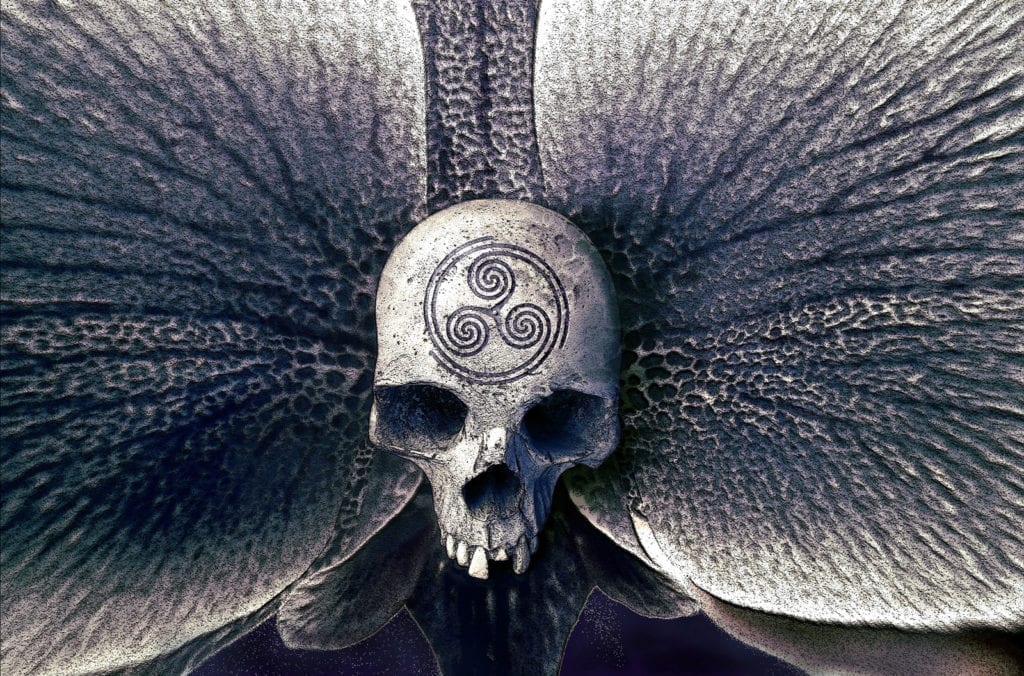
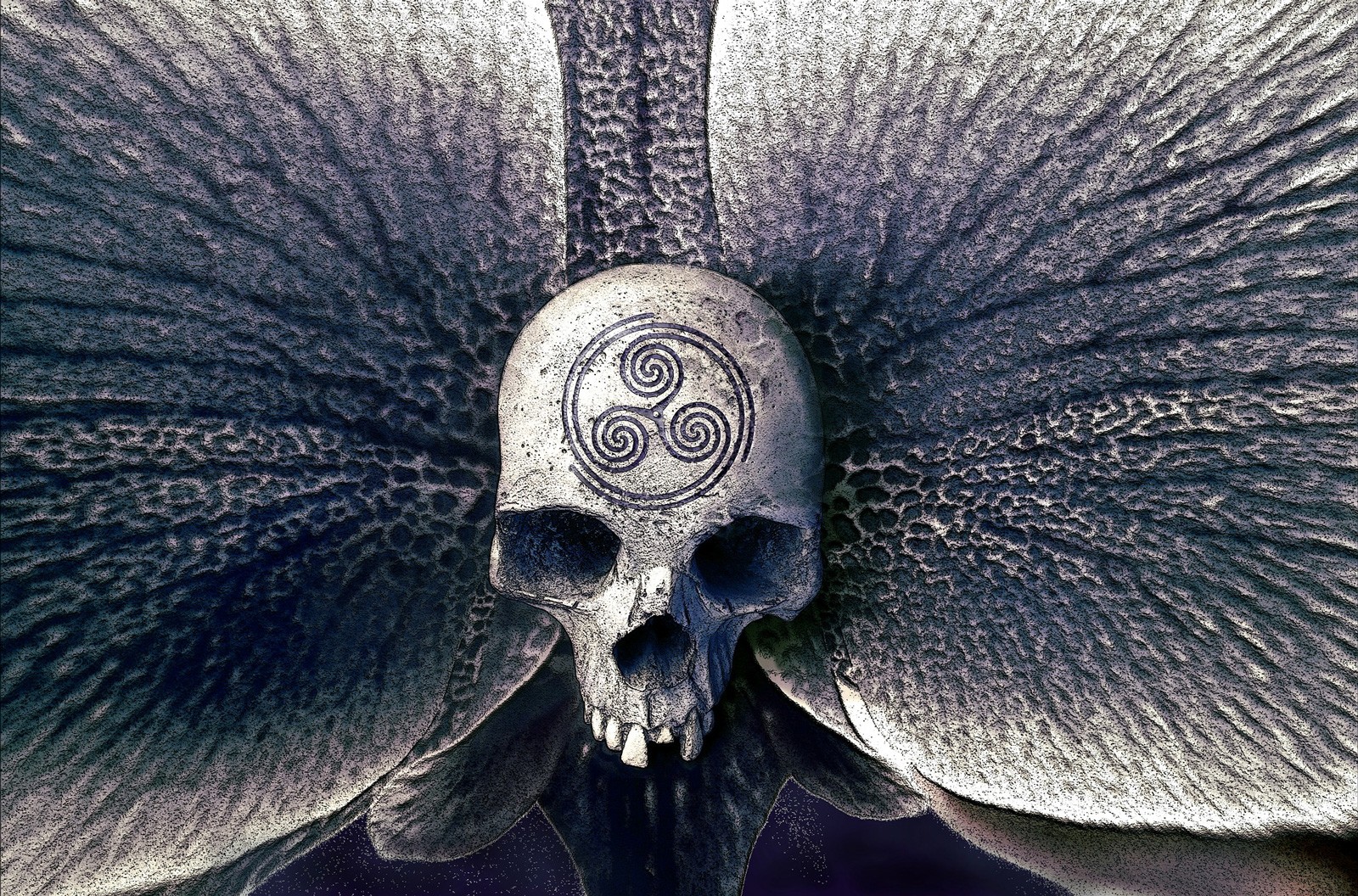
Symbolic Celtic Meaning of the Skull
Celtic skull symbolic meaning deals with some very deep themes. Stuff like transience, power, spirit and portals of new understanding. There are a lot of reasons the skull was a pervasive and powerful symbol to the ancient Celts, and I’ve done my best to offer you a well-rounded study of Celtic skull symbolic meanings in this article.